Sacramento · Elk Grove · Roseville · Folsom
Concrete built for the groundSacramento actually has.
Driveways, patios, foundations, stamped and polished concrete, commercial slabs and ADA sidewalks across the Sacramento Valley - engineered around expansive clay, summer heat and winter water instead of poured and hoped for.
- 12
- Concrete specialties
- 16
- Valley cities served
- 7 AM
- Summer pour starts
- Mon-Sat
- Crews dispatched
Residential flatwork
Engineered driveways, poured to a plan
What we build
Twelve concrete specialties, each with its own failure modes - and its own answers
A driveway, a warehouse floor and a retaining wall are three different engineering problems that happen to use the same material. Pick the one that matches your project.
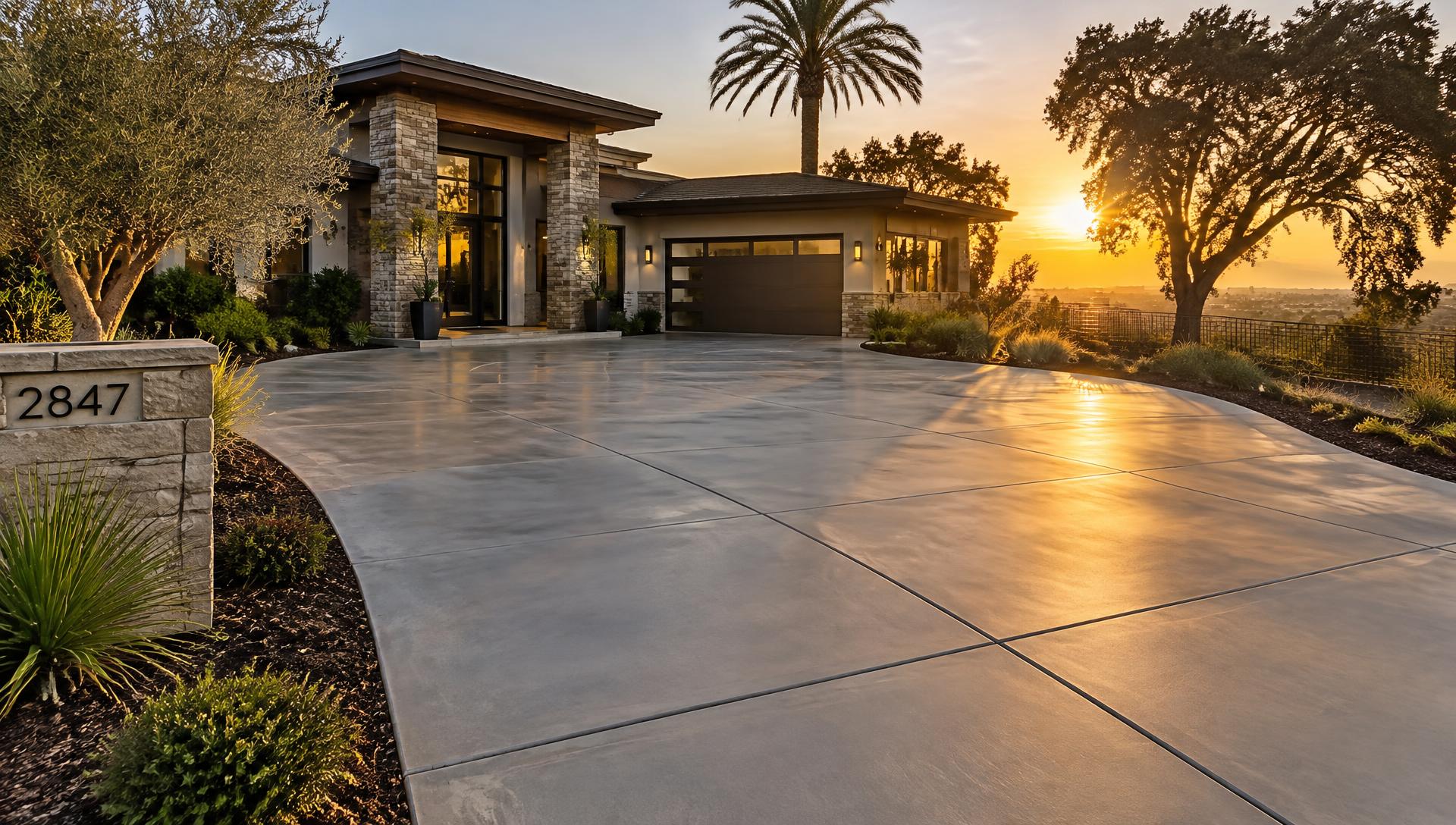
Concrete Driveways
Engineered residential driveways poured over compacted, moisture-conditioned subgrade with jointing laid out before the truck arrives.
View service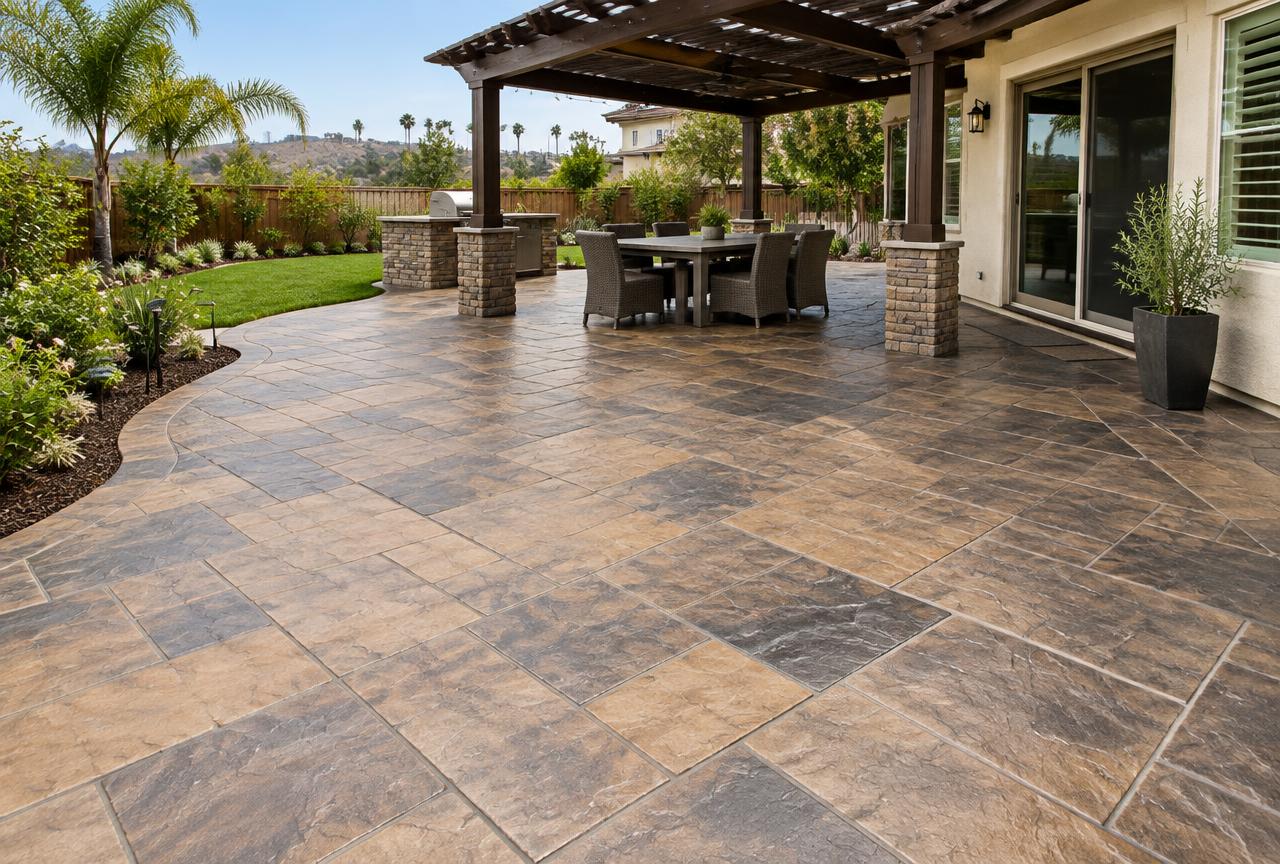
Stamped & Decorative Concrete
Stamped patios, walkways and pool decks with integral color, release, and a sealer schedule that survives Sacramento UV.
View serviceConcrete Patios & Walkways
Backyard patios, side yards and connecting walkways designed as one continuous surface with drainage that actually leaves the yard.
View service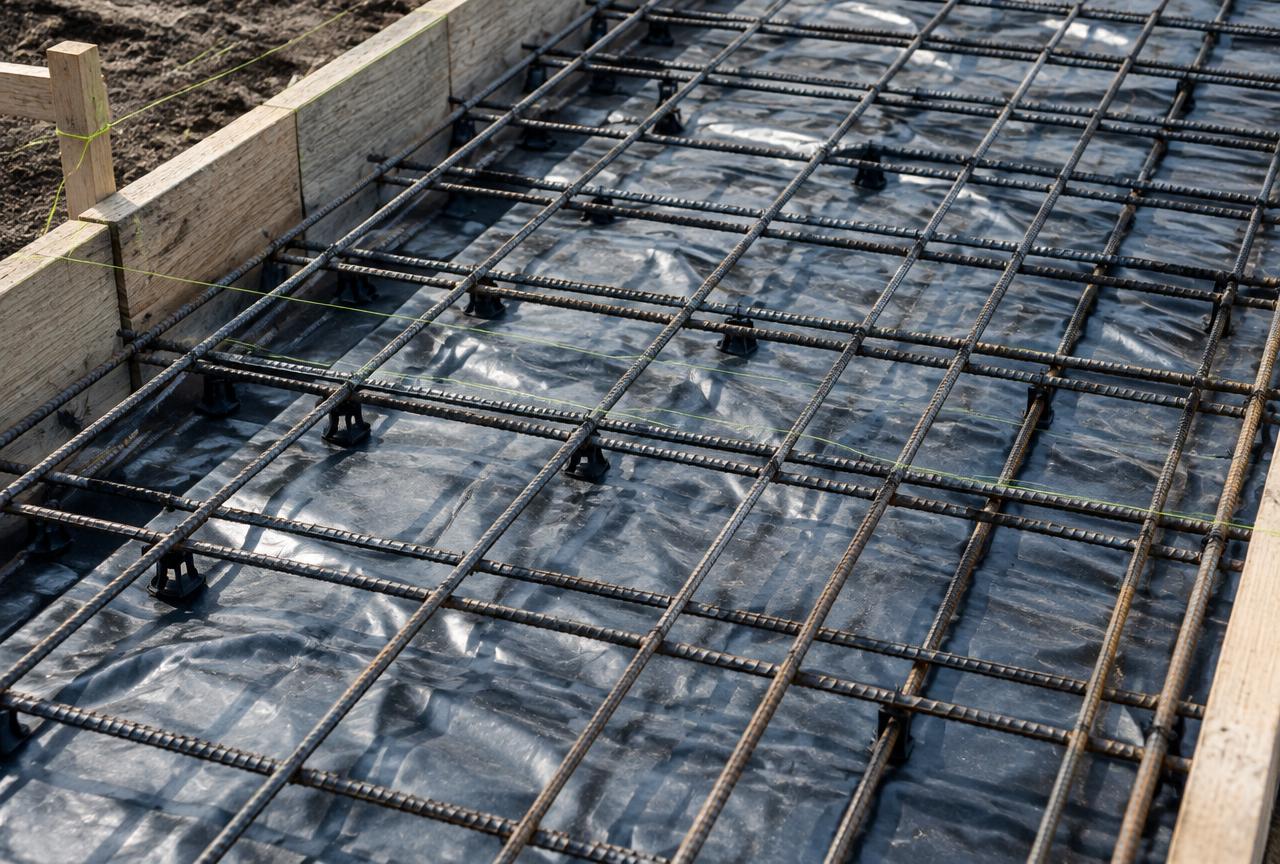
Foundations & Footings
Slab-on-grade, stem walls, spread footings and ADU foundations engineered for expansive Sacramento Valley soils.
View service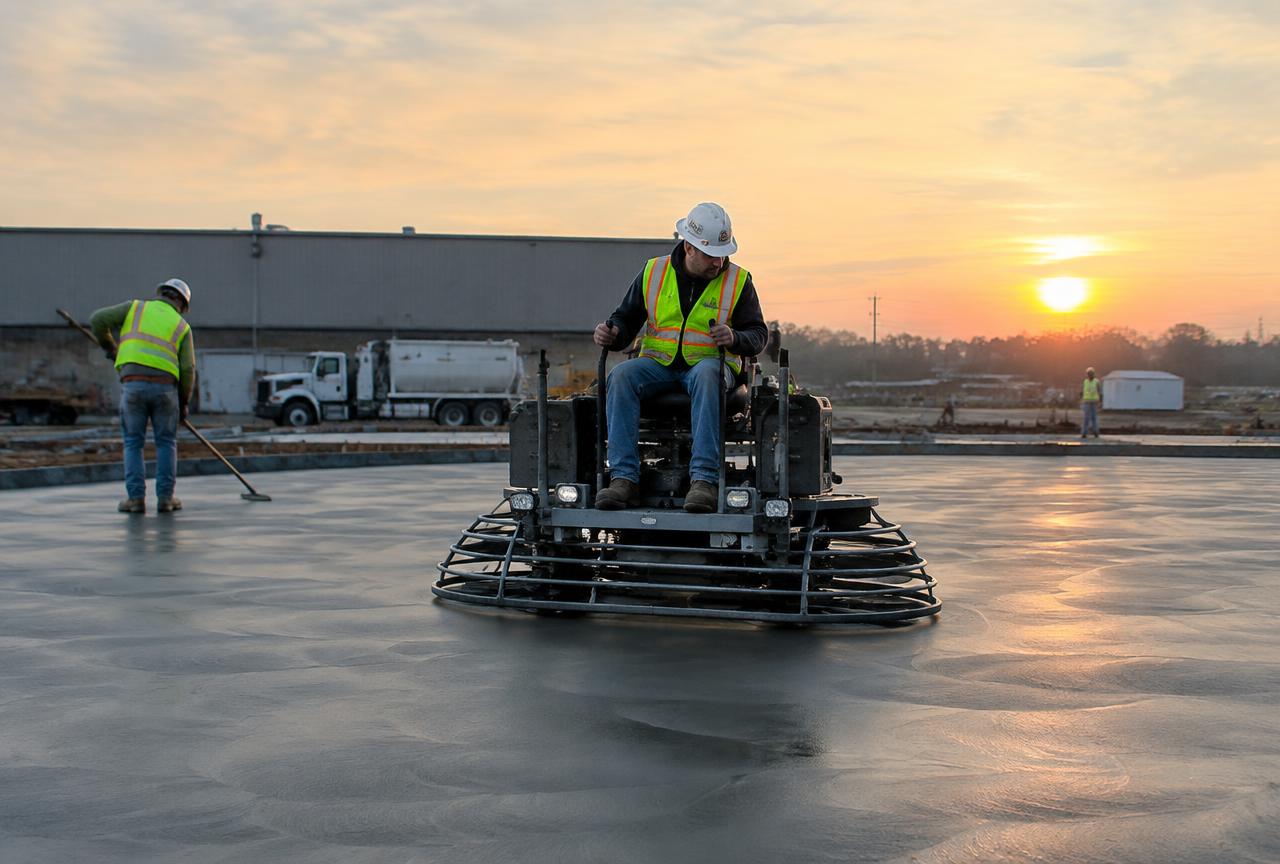
Commercial Concrete
Warehouse slabs, parking lots, loading docks and tenant improvement flatwork placed on schedule with phased access.
View service
Polished Concrete Floors
Mechanically ground and densified floors for retail, warehouse, office and modern residential interiors.
View service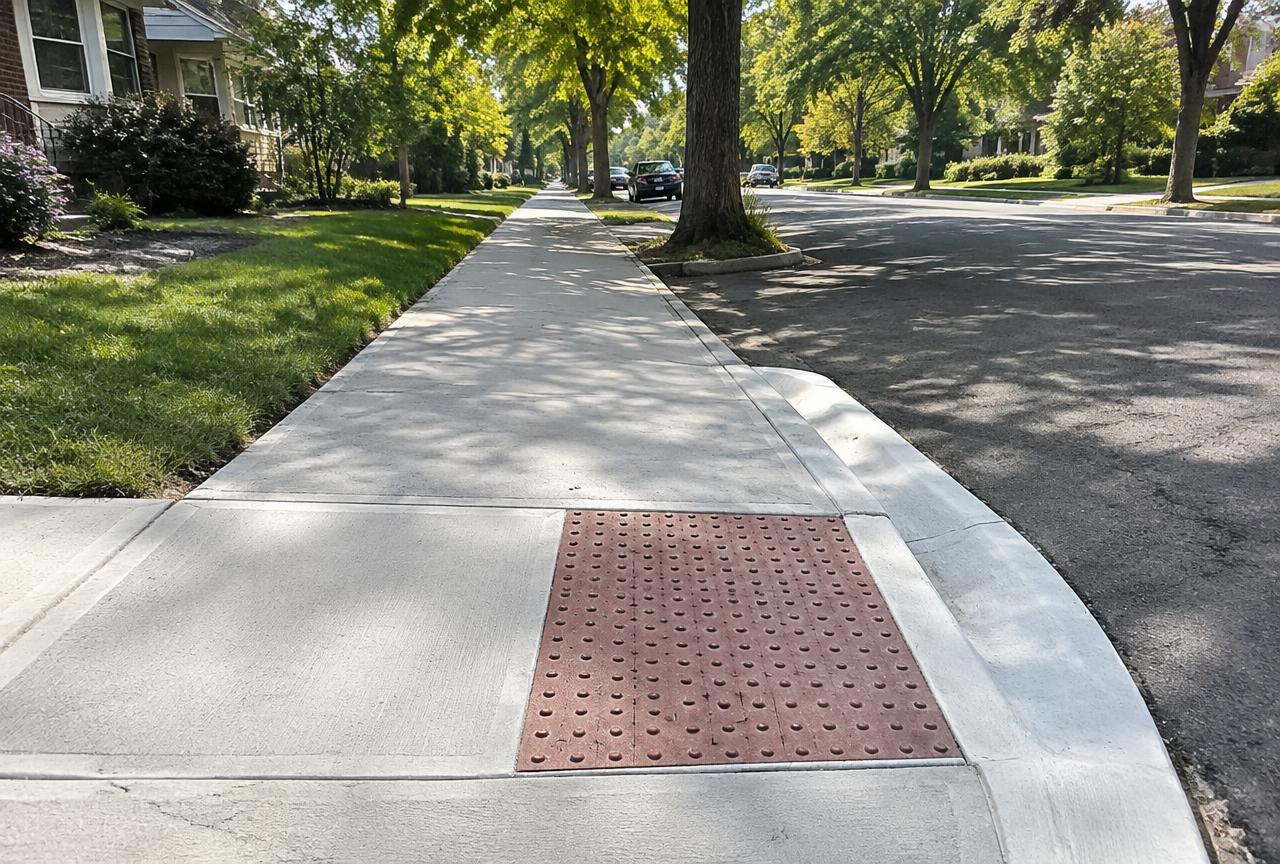
Sidewalks, Curbs & ADA Ramps
Public-standard sidewalks, curb and gutter, drive approaches and compliant curb ramps with detectable warning surfaces.
View serviceConcrete Repair & Resurfacing
Crack repair, slab lifting, spall patching and micro-topping overlays where replacement is not the right answer.
View serviceConcrete Retaining Walls
Engineered poured retaining walls and seat walls with proper drainage, drains and backfill behind the stem.
View serviceConcrete Demolition & Removal
Clean saw-cut removal of driveways, patios, slabs and footings with recycled haul-off and protected adjacent work.
View serviceRV Pads & Heavy Parking Slabs
Thickened, heavily reinforced pads for RVs, boats, trailers, work trucks and equipment storage.
View serviceGarage Slabs & Shop Floors
Garage floors, workshop slabs and detached shop foundations with vapor control and a finish built for tools and tires.
View serviceHow we build
Six decisions that separate concrete that lasts from concrete that looks fine for two summers
None of these are secrets. They are just the steps that get skipped when a crew is racing to the next pour - and they are the exact steps that determine whether your slab is still flat in fifteen years.
Subgrade first
Stripped, graded, compacted in lifts and proof-rolled. On clay we moisture-condition rather than dry-roll, because dry-compacted clay rebounds the first wet week.
Joints planned before the pour
Panel layout is drawn ahead of time and kept near square, aligned to doors and columns, then cut the same day so shrinkage relieves where we chose.
Steel where the engineer put it
Tied mats on chairs in the lower-middle third. Not mesh thrown on grade and hooked up with a rake halfway through the pour.
Water leaves the property
Slope, isolation joints, trench drains and downspout routing are designed into the slab. Nearly every failure we are called to fix started as a drainage problem.
Cured, not just poured
Early summer starts, evaporation retarder when the delta breeze picks up, and a real cure. The first seven days set the durability of the surface forever.
Told straight
If your slab can be repaired instead of replaced, we say so. If an overlay will fail on your substrate, we say that too - before you spend money on it.
Local ground conditions
The Sacramento Valley is not one soil, and one slab detail does not fit it
Near the American and Sacramento Rivers you are on alluvial silts and sands. Push out to Elk Grove, Antelope or east county and expansive clay takes over - ground that gains volume through a wet winter and gives it back through a 100-degree August.
Rocklin and Granite Bay sit on granite close to the surface, which means excavation is a different exercise and drainage cannot rely on percolation. Rancho Cordova has old dredge ground with cobble in it. West Sacramento has a high water table.
We scope each project against the ground it is going on, which is why our recommendations change from one side of the county to the other.
Sacramento
Highly variable - river-deposited silts and sands near the American and Sacramento Rivers, expansive clay lenses further from the channels.
Elk Grove
Expansive clay is common across much of Elk Grove, with meaningful seasonal shrink and swell.
Roseville
Clay and clay-loam with hardpan layers in areas, which affects both excavation and drainage design.
Folsom
Decomposed granite and rocky subgrade in the foothill transition, with cut-and-fill lots throughout.
Rancho Cordova
Former dredge-mined ground in areas, with variable fill and cobble that can surprise an excavation.
Citrus Heights
Clay-loam with hardpan in places; drainage tends to be the controlling design issue.
Carmichael
River terrace soils near the parkway, clay further inland; tree protection frequently shapes the work.
West Sacramento
Low-lying river basin soils with a high water table in places, which affects excavation and slab detailing.
Davis
Yolo silty clay loam, agricultural in origin, generally workable but moisture-sensitive.
Woodland
Deep agricultural clay loam with high shrink-swell potential in the heavier series.
All 16 service areasThe sequence
What happens between your call and a finished slab
- 1
Call
Describe the project and the site. We ask about grade, drainage and access.
- 2
Site walk
We measure, check where water goes, and identify what the ground will do.
- 3
Scope
Thickness, reinforcement, joint layout and finish are agreed in writing.
- 4
Prep
Demolition, excavation, base, compaction, forms and steel.
- 5
Pour
Placement, finishing, jointing and cure - usually one working day.
- 6
Walk-through
We review the finished work, cure timing and when you can use it.
Field notes
Written for homeowners, not for search engines
Homeowner guides · 7 min read
Why Concrete Cracks in Sacramento - and Which Cracks Actually Matter
Every slab cracks. The question is whether it cracked where you planned or somewhere you did not - and this guide shows you how to tell the difference.
Homeowner guides · 6 min read
How Thick Should a Concrete Driveway Be? A Sacramento Answer
Four inches is the default answer. It is also the wrong answer for a surprising number of Sacramento driveways - here is how to tell which camp you are in.
Comparisons · 6 min read
Stamped Concrete vs Pavers in Sacramento: An Honest Comparison
Both are good products. They fail differently, they age differently, and one of them is clearly better for your specific project.
Common questions
Answers before you pick up the phone
More on the full FAQ page, including permits, timelines, curing and maintenance.
Talk to a concrete contractor who works in Sacramento every day
Describe the slab, the site and what is going wrong. You will get a straight answer about what the work involves - including when we think you do not need us.
Mon-Sat 7:00 AM - 6:00 PM · Sacramento, Elk Grove, Roseville, Folsom & surrounding valley