Sacramento, California

Polished Concrete Floors in Sacramento, CA

Polished concrete is not a coating. It is the slab itself, ground through progressive diamond grits and chemically densified until the surface is hard, closed and reflective.

That is why it outlasts epoxy in high-traffic space: there is no film to delaminate. What you are buying is a process - the grit sequence and the densifier - not a product in a bucket.

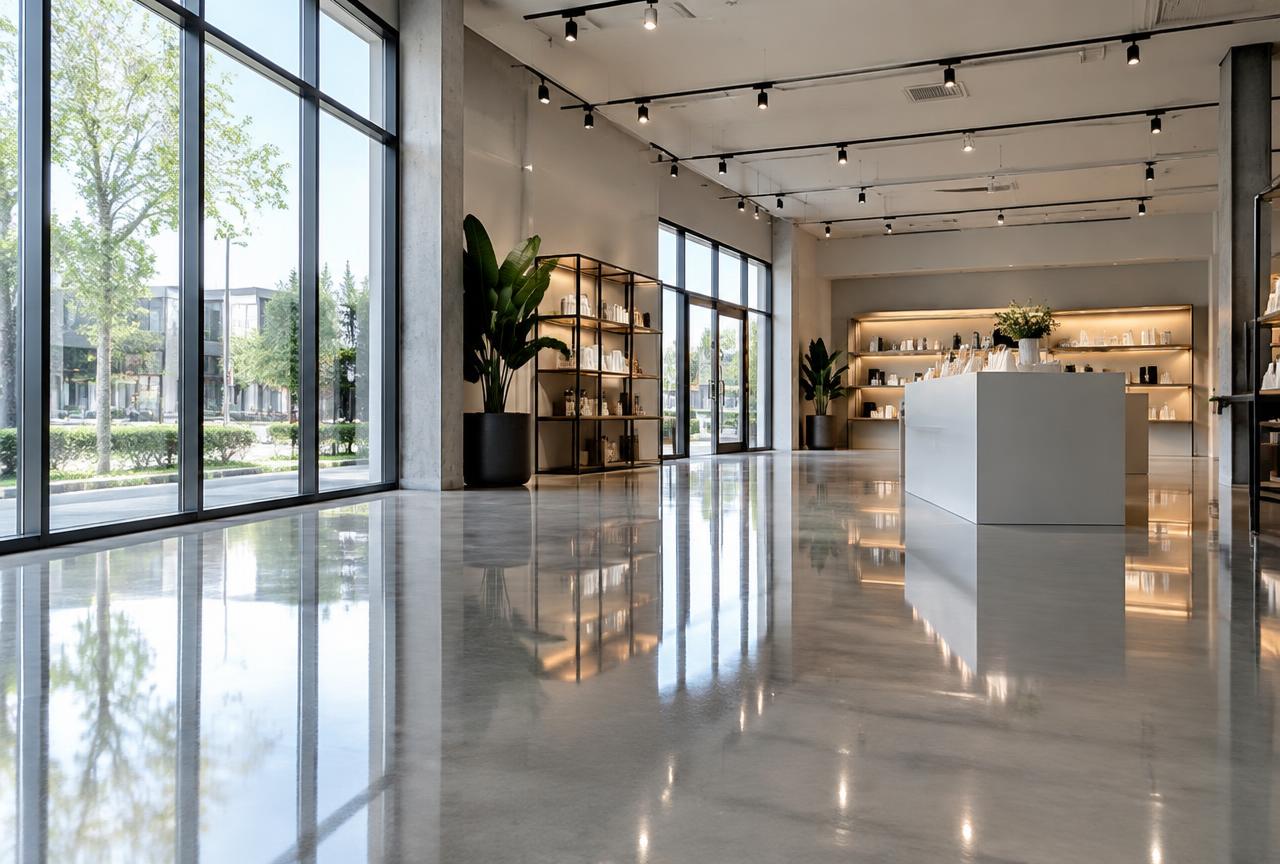
High-gloss polished concrete floor in a bright modern retail interior
Aggregate exposure
Cream, salt-and-pepper or full aggregate exposure
Gloss levels
Matte through high gloss, selected by grit endpoint
Densifier
Lithium or sodium silicate densification during the grit sequence
Protection
Penetrating stain-guard, not a topical film

Choosing your aggregate exposure first

How deep we grind decides the entire look. A light cream polish keeps the surface close to as-cast. Salt-and-pepper cuts just past the paste to reveal sand. Full exposure opens the large aggregate and reads like terrazzo.

  • Cream polish - minimal cut, most variation from the original pour
  • Salt-and-pepper - the most common commercial and residential choice
  • Full aggregate - dramatic, and dependent on what is actually in the slab

Densification is what makes it last

Chemical densifier reacts with free lime in the slab to form additional hardened material inside the pore structure. That is what makes a polished floor resist abrasion and dusting instead of wearing into a chalky path down the middle of the aisle.

  • Densifier applied at the correct point in the grit sequence
  • Even saturation and dwell rather than a quick surface wipe
  • Final burnish to close the surface

Honest assessment of your existing slab

Polishing reveals the slab's history. Old patches, pipe trenches, forklift burns and prior mastic show up. We check the floor before committing to a look, and we tell you which finishes are realistic for the concrete you actually have.

  • Moisture and hardness assessment before the grit plan is set
  • Mastic, glue and coating removal as a separate prep phase
  • Patch and repair strategy agreed before grinding begins

Dyes, decorative cuts and joint treatment

Dye can add depth without covering the concrete. Saw-cut patterns can divide a large floor into panels or add a border. Traffic-area joints get semi-rigid filler so wheel loads do not spall the arrises.

  • Penetrating dye applied mid-sequence for color that lives in the slab
  • Decorative saw-cut banding and inlays
  • Semi-rigid joint filler in forklift and cart traffic lanes

In depth

Polished Concrete Floors in Sacramento, explained properly

What polishing can and cannot fix

Mechanical polishing refines the slab you already have. It will not correct a slab that is out of level, hide a patch poured with a different mix, or reverse a surface that was overworked and sealed with a hard trowel burnish. Before quoting a grind sequence we test the slab hardness, check for existing coatings and adhesives, look at the aggregate depth, and tell you what exposure level is realistically achievable. Setting that expectation early is the difference between a floor the owner is pleased with and one that never matched the reference photo.

The grinding sequence and gloss level

A polished floor is produced by a progression of metal bonded and resin bonded diamonds, with a densifier applied at the correct point in the sequence so the surface hardens before the fine passes refine it. Skipping grits to reach gloss faster produces shine sitting over scratches that become visible under raking light within weeks. We hold the sequence, adjust bond hardness to the actual slab rather than the average slab, and finish at the gloss level specified rather than the highest number available.

Slab moisture, staining and life in a Sacramento building

Polished concrete is durable but not chemically inert. Acidic spills etch it, and an unprotected floor in a kitchen or a workshop will show that. We apply a penetrating stain guard where the use case warrants it and set out a maintenance routine built on neutral cleaners and regular dust mopping. On slab on grade without a functioning vapor retarder, we test moisture first, because densifiers and guards behave differently over a slab that is still driving vapor upward.

What we build to

Standards and specifications on every polished concrete floors project

  • Progressive diamond sequence with no skipped grits
  • Densifier applied at the correct stage for the slab hardness
  • Gloss measured against the specified level, not by eye alone
  • Slab moisture tested before guard or coating application

What goes wrong elsewhere

The failures we are called in to replace

  • Jumping grits to save time, leaving scratch patterns under the gloss
  • Densifying too early or too late in the sequence
  • Polishing over unmapped patches that will never match
  • No stain guard in a food or chemical exposure area
  • Cleaning with acidic or general purpose retail cleaners afterward

Local conditions

How Sacramento ground changes this work

Warehouse and retail slabs across the Sacramento region vary widely in age and finish quality. A 1970s tilt up slab and a slab poured last year polish differently, and the only reliable way to predict the result is a test patch on that specific floor.

Before you call, it helps to have

  • Identify existing coatings, adhesives and previous repairs
  • Agree the target aggregate exposure and gloss level
  • Plan power, water and dust control for the grinding phase
  • Set the ongoing cleaning routine before handover
877-889-1187

Questions

Polished Concrete Floors - frequently asked

Still unsure? Call 877-889-1187 and describe the site. We would rather talk you out of unnecessary work than sell it to you.

For most high-traffic interiors, yes - there is no film to peel, chip or delaminate, because the finish is the slab. Epoxy still wins where chemical resistance or a seamless waterproof surface is the requirement.

Talk to a concrete contractor who works in Sacramento every day

Describe the slab, the site and what is going wrong. You will get a straight answer about what the work involves - including when we think you do not need us.

Mon-Sat 7:00 AM - 6:00 PM · Sacramento, Elk Grove, Roseville, Folsom & surrounding valley

Call 877-889-1187