Antelope, Sacramento County

Foundations & Footings in Antelope, CA

Slab-on-grade, stem walls, spread footings and ADU foundations engineered for expansive Sacramento Valley soils. In Antelope, that work starts with the ground: expansive clay with notable seasonal movement, a consistent driver of slab cracking here.

Dense late-80s and 90s tract housing where original builder flatwork is reaching the end of its service life across whole streets.

Foundations & Footings in Antelope, California
Systems
Slab-on-grade, stem wall / raised, spread footings, grade beams
Vapor control
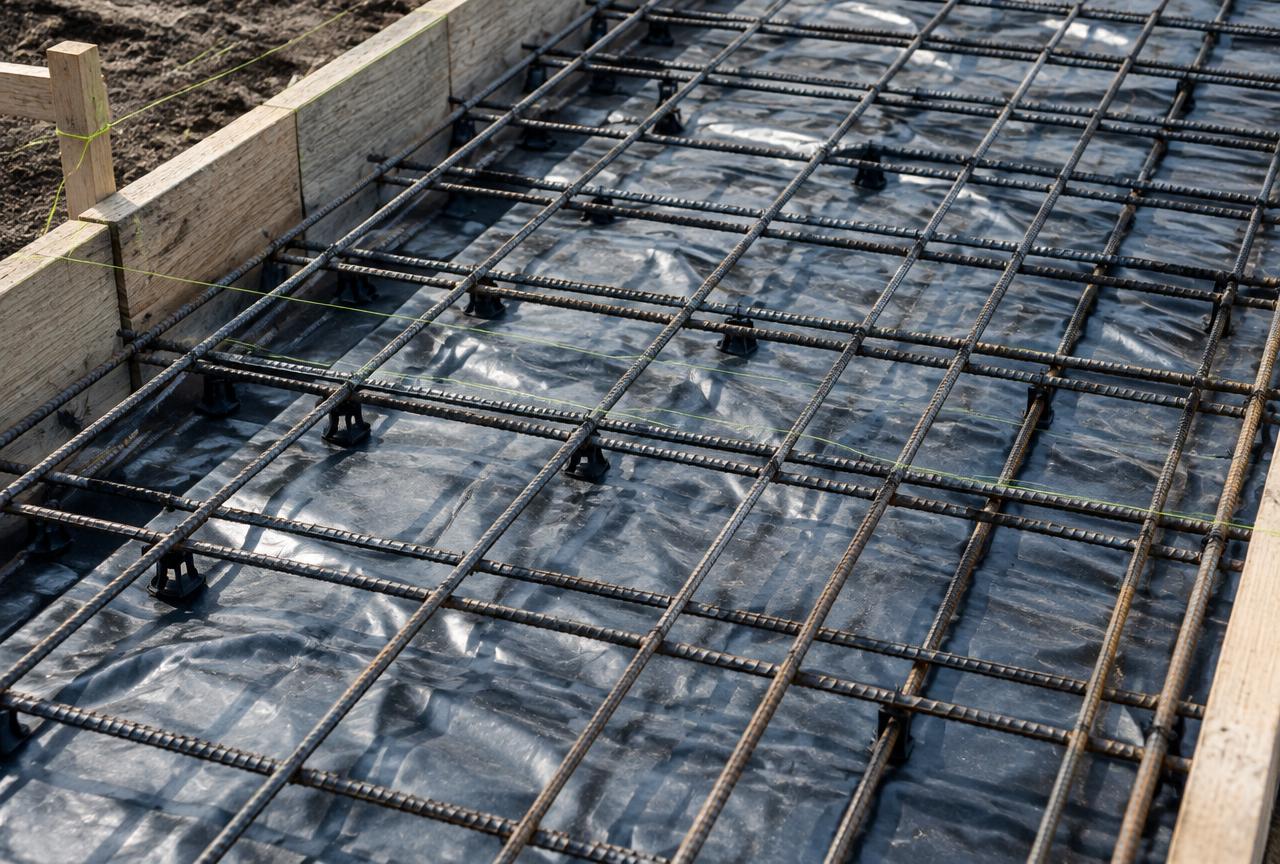
10-15 mil vapor retarder over capillary break where specified
Steel
Engineered rebar schedule, chaired and tied, inspected before pour
Compliance
Built to stamped plans, city or county inspection at each hold point

What Antelope ground means for foundations & footings

Expansive clay with notable seasonal movement, a consistent driver of slab cracking here.

Foundation performance in Elk Grove, Antelope and parts of Rancho Cordova is dominated by clay movement, while riverside Sacramento and West Sacramento sites bring groundwater and loose alluvium instead. The mitigation is different in each case, and the soils report is the only honest way to know which you have.

  • Builder-grade driveways from this era commonly lack adequate reinforcement for clay movement.
  • Tight lot spacing makes staging and material delivery a planning item.
  • Patio slabs poured hard against foundations without isolation joints are a frequent found condition.
  • Drainage between closely spaced homes needs attention during any side-yard work.

We build to the engineer's drawing

Footing width, depth, rebar size, spacing, lap length, dowel placement and anchor layout come from stamped plans. We do not substitute, and we do not pour until the inspector has signed the steel.

Moisture control under the slab

A vapor retarder is cheap insurance against flooring failures years later. We lap and seal it properly, protect it from puncture during steel placement, and detail penetrations rather than taping over a shredded sheet.

Expansive soil strategies

Where the report flags high expansion potential, the fix is structural and hydrological: stiffer sections, deeper footings, moisture-conditioned subgrade, and site drainage that keeps water from cycling the clay around the perimeter.

Permits for foundations & footings in Antelope

Antelope is unincorporated Sacramento County, so building and encroachment permits go through the county. Work touching the public sidewalk or drive approach follows the county standard detail.

Our standard

How foundations & footings in Antelope should be built

Footing depth, width and steel per the structural drawings
Moisture conditioning and presaturation per the geotechnical report
Rated vapor retarder, lapped, taped and sealed at penetrations
Anchor bolts and hold downs set to template before placement

Antelope in detail

Building foundations & footings in Antelope: what actually changes here

Antelope is predominantly 1980s and 1990s tract housing on clay heavy ground, and that combination produces a very recognizable set of concrete problems. Original driveways poured at minimum thickness with mesh that never made it into the slab, control joints cut too shallow or too late, and seasonal movement that has opened those cracks into stepped displacement. Replacement done properly is usually more economical over time than repeated patching.

Drainage is the second recurring theme. Tract grading put the fall where the plan needed it, but decades of landscaping, planter additions and irrigation have often reversed it near the house. Before designing a slab we look at where water currently goes, because a new patio placed into a low point simply becomes a better looking low point.

Access on these lots is generally good, with standard side gates and workable street frontage, so the work tends to move on schedule once the base decisions are made correctly.

Expansive soil and why the soils report governs

Large parts of the Sacramento Valley sit on clays with meaningful shrink and swell potential. A foundation designed without accounting for that will move seasonally, and the symptoms show up as sticking doors, drywall cracking at corners and a slab that reads out of level long after construction. The geotechnical report drives footing depth, moisture conditioning requirements, presaturation, vapor retarder class and reinforcement. We build to that report and to the structural drawings, and we flag conflicts between the two before concrete is ordered rather than during inspection.

Vapor retarder and slab moisture

Under a slab that will receive flooring, the vapor retarder is a performance component, not a formality. We place a correctly rated membrane, lap and tape seams, seal penetrations at plumbing and conduit, and protect it from being punctured by rebar chairs and boot traffic during steel placement. Skipping that care is invisible for a year and then shows up as flooring adhesive failure or cupped wood, at which point the fix is far more disruptive than the membrane ever was.

Inspection sequence and holding the schedule

Foundation work is a gated process. Setback and forms, underground plumbing, steel and anchor bolts, and sometimes a special inspection for engineered fill all sit between excavation and the pour. We schedule with those gates in mind, have the drawings and the approved plan set on site, and keep anchor bolt templates and hold downs set to the plan so the framer is not chasing a bolt that landed an inch off. A pour that happens on schedule is usually a pour that had its paperwork ready a week earlier.

Common Antelope jobs

Projects Antelope homeowners call us for

  • Driveway replacement on expansive clay

    Moisture conditioned base, chaired rebar mats, and early entry joint cuts the same day as the pour.

  • Rear patio with drainage correction

    Existing fall assessed, slope rebuilt away from the structure, and a drain added where the lot has no natural outlet.

  • Walkway and side yard slab

    Grade re established, isolation at the building line, and panels kept near square.

  • Repair and crack assessment

    Pattern read to identify settlement versus shrinkage, with the response chosen from the diagnosis.

Avoid these

Foundations & Footings mistakes we replace in Antelope

  • Building to a generic detail instead of the project soils report
  • Vapor retarder punctured during steel placement and never repaired
  • Anchor bolts wet set by eye after the concrete is placed
  • Backfill placed against green concrete before it has strength
  • Site drainage left to be solved later, which loads the foundation

Before you call about foundations & footings

  • Have the geotechnical report and structural set available at the site walk
  • Confirm the inspection sequence with the building department
  • Identify utility locations and required sleeves early
  • Plan site drainage as part of the foundation, not after it

Where we work

Foundations & Footings across Antelope neighborhoods

Antelope North Elverta Road corridor Roseville Road area Antelope Crossing

ZIP codes: 95843

Questions

Foundations & Footings in Antelope - frequently asked

Yes. Foundations & Footings is part of our regular work in Antelope and across Sacramento County, including Antelope North, Elverta Road corridor, Roseville Road area. Call 877-889-1187 to talk through your site.

Talk to a concrete contractor who works in Sacramento every day

Describe the slab, the site and what is going wrong. You will get a straight answer about what the work involves - including when we think you do not need us.

Mon-Sat 7:00 AM - 6:00 PM · Sacramento, Elk Grove, Roseville, Folsom & surrounding valley